Skip to content
FREE SHIPPING | UP TO 30% OFF | SHOP NOW
Knives & Boards

KEEP YOUR EDGE

Forged from Japanese Damascus steel, our blades deliver razor-sharp precision, ergonomic comfort and durable performance.

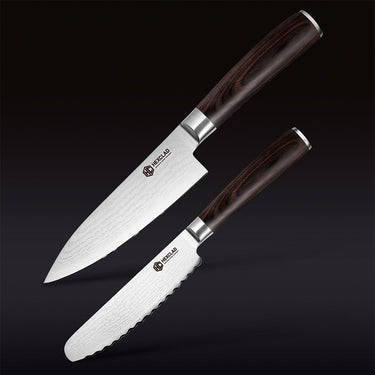
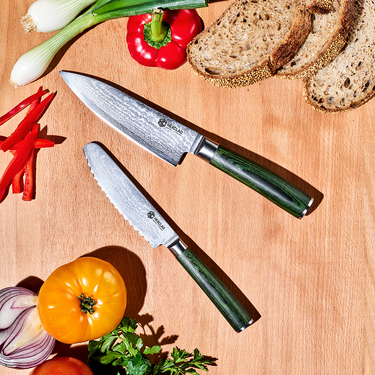
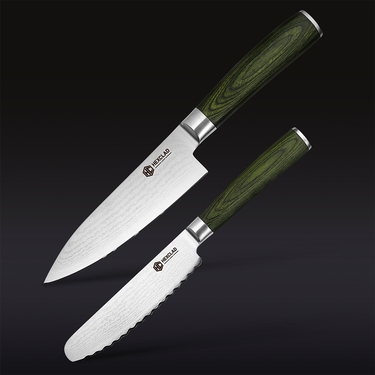
Damascus Steel Starter Knife Set, 2-pc (Green)

New Damascus Steel Starter Knife Set, 2-pc (Green)

$199
$199 ( $199 value)
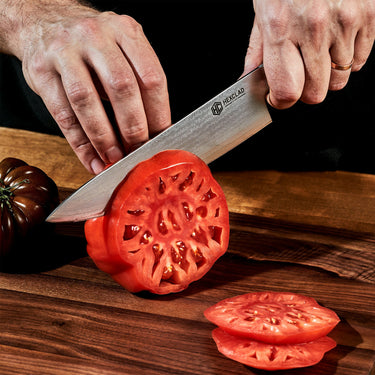
Damascus Steel Chef

New Damascus Steel Chef's Knife, 8" (Espresso)

$139
$139 ( $139 value)
Damascus Steel Chef

Damascus Steel Chef's Knife, 8" (Green)

$139
$139 ( $139 value)
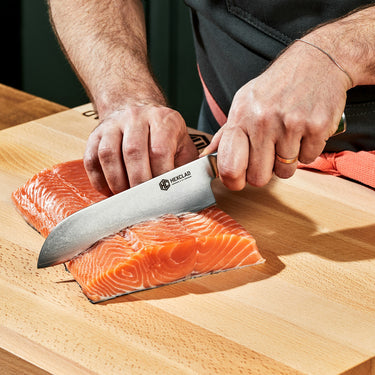
Damascus Steel Santoku Knife, 7" (Espresso)

New Damascus Steel Santoku Knife, 7" (Espresso)

$129
$129 ( $129 value)
Damascus Steel Santoku Knife, 7" (Green)

Damascus Steel Santoku Knife, 7" (Green)

$129
$129 ( $129 value)
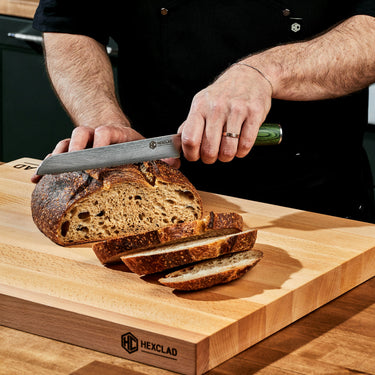
Damascus Steel Serrated Bread Knife, 8" (Espresso)

New Damascus Steel Serrated Bread Knife, 8" (Espresso)

$139
$139 ( $139 value)
Damascus Steel Serrated Bread Knife, 8" (Green)

Damascus Steel Serrated Bread Knife, 8" (Green)

$139
$139 ( $139 value)
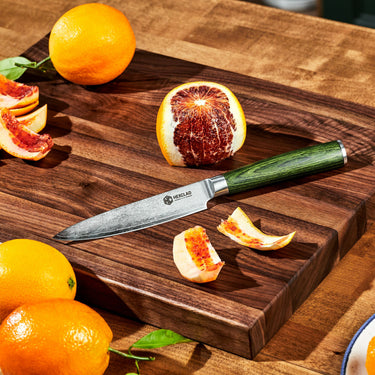
Damascus Steel Utility Knife, 5" (Espresso)

New Damascus Steel Utility Knife, 5" (Espresso)

$99
$99 ( $99 value)
Damascus Steel Utility Knife, 5" (Green)

Damascus Steel Utility Knife, 5" (Green)

$99
$99 ( $99 value)
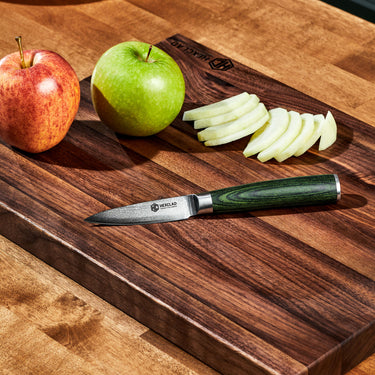
Damascus Steel Paring Knife, 3.5" (Espresso)

New Damascus Steel Paring Knife, 3.5" (Espresso)

$79
$79 ( $79 value)
Damascus Steel Paring Knife, 3.5" (Green)

Damascus Steel Paring Knife, 3.5" (Green)

$79
$79 ( $79 value)
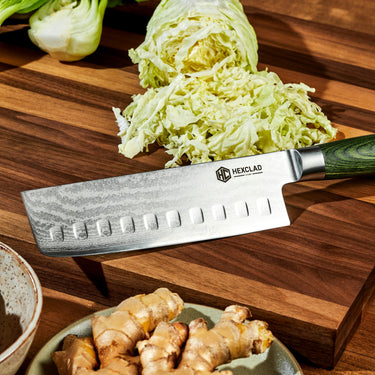
Damascus Steel Nakiri Knife, 6.5" (Espresso)

New Damascus Steel Nakiri Knife, 6.5" (Espresso)

$149
$149 ( $149 value)
Damascus Steel Nakiri Knife, 6.5" (Green)

Damascus Steel Nakiri Knife, 6.5" (Green)

$149
$149 ( $149 value)
Damascus Steel Cleaver, 7" (Espresso)

New Damascus Steel Cleaver, 7" (Espresso)

$199
$199 ( $0 value)
Damascus Steel Cleaver, 7" (Green)

Damascus Steel Cleaver, 7" (Green)

$199
$199 ( $199 value)
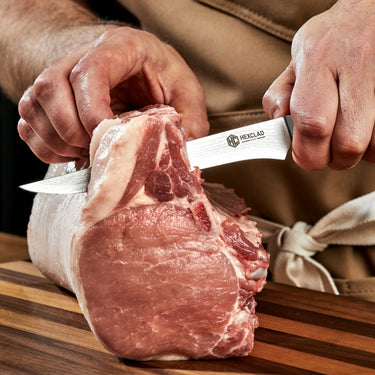
Damascus Steel Boning & Fillet Knife, 6" (Espresso)

New Damascus Steel Boning & Fillet Knife, 6" (Espresso)

$129
$129 ( $129 value)
Damascus Steel Boning & Fillet Knife, 6" (Green)

Damascus Steel Boning & Fillet Knife, 6" (Green)

$129
$129 ( $129 value)
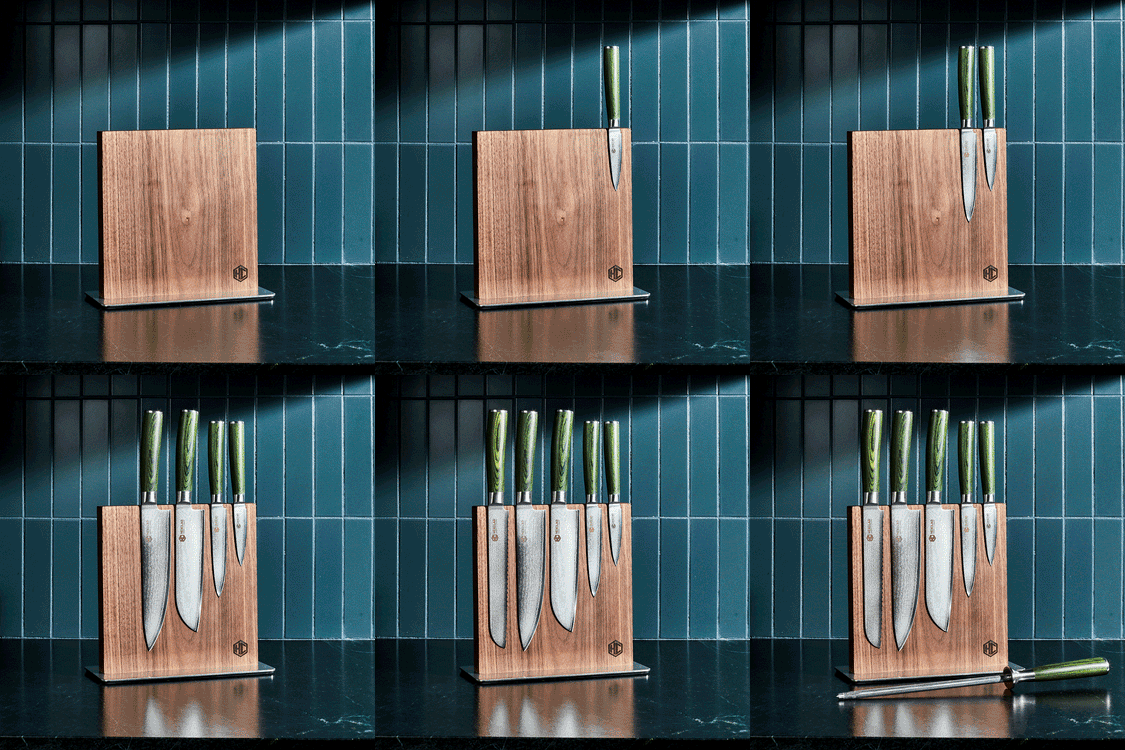
Magnetic Knife Block, Walnut

Magnetic Knife Block, Walnut

$129
$129 ( $129 value)
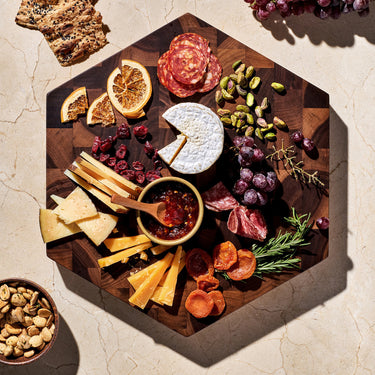
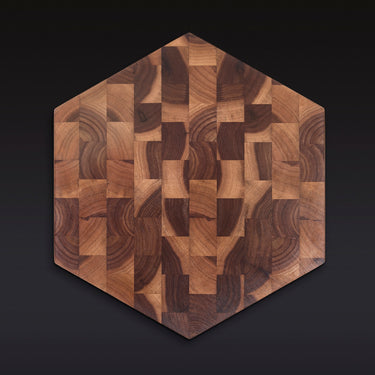
End Grain Walnut Charcuterie Board

New End Grain Walnut Charcuterie Board

$199
$199 ( $199 value)
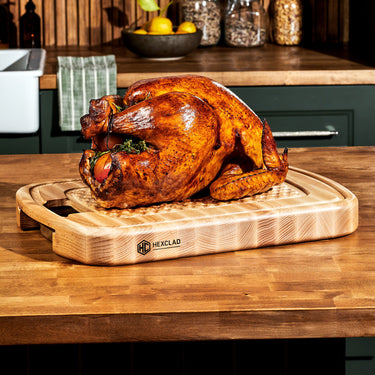
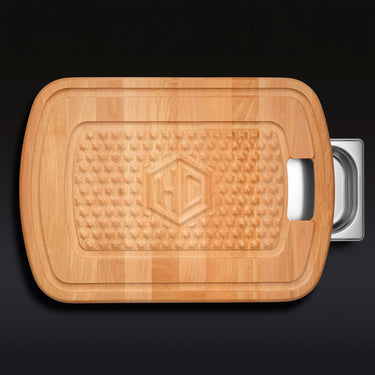
Hybrid Carving & Cutting Board

Hybrid Carving & Cutting Board

$199
$199 ( $199 value)
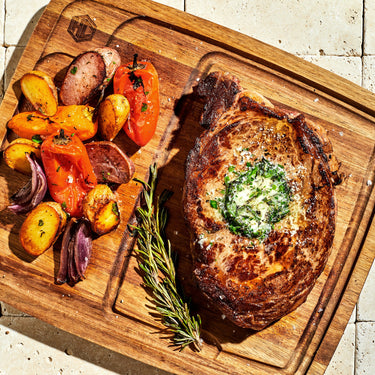
Bistecca Plate Set, 4-pc

Bistecca Plate Set, 4-pc

$99
$99 ( $99 value)
Walnut Cutting Board, Medium

Walnut Cutting Board, Medium

$89
$89 ( $89 value)
Walnut Cutting Board, Large

Walnut Cutting Board, Large

$99
$99 ( $99 value)
Beechwood Cutting Board, Extra-Large

Beechwood Cutting Board, Extra-Large

$109
$109 ( $109 value)

FAQ

Explore our FAQ to learn more about our offers, features, and services. If you can't find the answer to your question, our team is here to help!

No. Dishwashers hit wood with high heat and standing water, and wood does not forgive either one — the fibers swell as they soak, then dry back out unevenly, which is exactly how a flat board turns into a warped, splitting mess. It doesn't matter if it's end-grain or edge-grain, thick or thin; moisture is moisture, and wood loses that fight every time. Hand wash yours instead: warm water, a little dish soap, a sponge, done. Then stand it upright so air can move across both sides while it dries — laying it flat traps moisture against the counter and undoes half the benefit of hand washing in the first place. For the full rundown on products, drying time and what to avoid, check out our guide on how to clean and sanitize wooden cutting boards safely. It's worth the extra 30 seconds of care: for cooks who invest in good chef's knives — whether classic chef's knives, santoku blades or specialty knives — a wood board is doing real work behind the scenes to keep those edges sharp longer than plastic or glass ever could, since wood has just enough give to protect a blade's edge instead of grinding it down with every cut. We get into exactly why that matters in wooden vs. plastic cutting boards: key differences, along with which material actually makes sense for your kitchen.

Yes, more than most people think. Toss a chef's knife into a drawer with spatulas, tongs and everything else, and every time that drawer opens or closes, metal hits metal. That friction is quietly dulling your edge before you've cut a single vegetable. A dedicated block, an in-drawer knife tray or a magnetic strip solves the problem by giving every blade its own space — no contact, no chipping, no mystery nicks you can't explain. We break down the tradeoffs of each setup, along with a few storage mistakes almost everyone makes, in our kitchen knife storage tips that keep blades sharp and accessible. Magnetic knife blocks specifically have become the go-to for serious home cooks and professional cooks alike: full visibility of your whole set at a glance, easy grab-and-go during a busy kitchen task, and zero blade-on-blade contact since each knife hangs on its own. If counter space is tight, a slim magnetic strip mounted to the wall gives you all the same protection without eating into your prep area, which matters just as much in a home kitchen as it does behind a professional line.
Yes, on a regular schedule, not just once when the board is new. Food-grade mineral oil soaks into the wood grain and creates a barrier that blocks moisture from getting in, which is what actually keeps your board from drying out, cracking down the middle or turning into a breeding ground for bacteria in those cracks. Skip the vegetable or olive oil sitting in your pantry — both go rancid inside the wood over time — and stick with mineral oil made specifically for food contact surfaces. A good rule of thumb is once a month for boards in regular rotation, more often if you notice the surface looking dry, pale or rough to the touch. We walk through the full routine — how often, how much oil to use and the best way to apply it — in how to oil a wooden cutting board for lasting performance, so your board stays functional (and good-looking) for years instead of months.

No, and this one is non-negotiable if you actually care about your blades. Dishwasher detergent is harsh enough to dull even a well-maintained edge, stripping away the fine polish that keeps a blade razor sharp, while water jets knock the knife against the rack (or other utensils) hard enough to cause chipping you can't even see happening until the damage is done. That goes double for carbon steel knives, which can develop rust spots from prolonged water exposure in ways that stainless alloys resist. Hand washing takes about 10 seconds per knife and saves you the edge entirely: warm water, a quick wipe with a soft sponge, dry immediately with a towel rather than letting it air dry in the rack. We get into exactly why in why you can't put your high-end knives in the dishwasher, including what the heat and detergent are doing to the metal at a level you can't see with the naked eye.

The blade, mostly, though the construction matters just as much. Every HexClad knife starts with 67 layers of Japanese Damascus steel, forged and folded until the edge gets razor sharp in a way that's genuinely hard to replicate with a single-piece stamped blade. That's the same forging tradition behind classic Japanese knives, prized for holding a fine edge through repeated use. From there we go hybrid: a traditional Japanese full tang runs the entire length of the handle for stability and control, paired with a heavier Western-style bolster so the knife carries real weight exactly where your hand expects it. Blade length is where personal preference comes in — home cooks often gravitate toward an 8-inch chef's knife for most kitchen tasks, while professional cooks and line cooks working through high-volume prep might reach for something longer for the reach and momentum it offers on precise cuts. Either way, the steel quality and the sharp edge it holds aren't up for debate; that part is built in from the first layer of Damascus steel to the last.