Explore our FAQ to learn more about our offers, features, and services. If you can't find the answer to your question, our team is here to help!
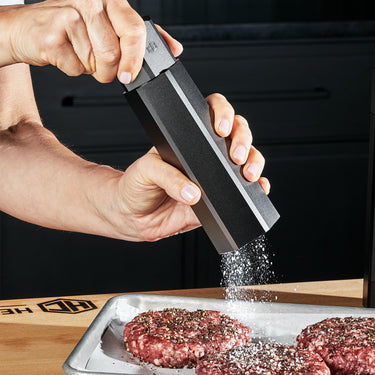
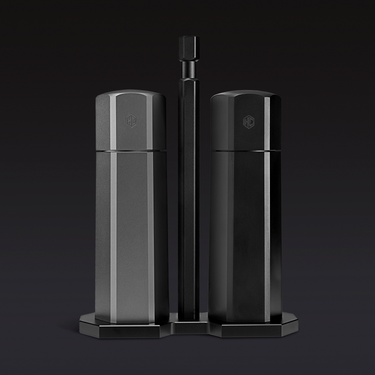
Yes, and it's not close. A burr grinding mechanism crushes peppercorns evenly between two steel burrs instead of hacking them apart the way a spinning blade does, which locks in bold aromas and keeps your grind size consistent from the first crank to the last. Blade grinders, by contrast, chop unevenly: you end up with a mix of fine pepper dust and coarse chunks in the same twist, which means wildly inconsistent seasoning from bite to bite, and a grinder that struggles more the longer you use it. That evenness is exactly the mechanism behind our flagship HexMill pepper grinder. No pepper dust clouding your food, no random coarse chunks that overpower a single bite, just a clean, even grind every time you reach for it, whether you're finishing a simple weeknight dinner or seasoning for a crowd of six. It's also part of why a good burr mechanism tends to outlast a blade one: there's less friction heat generated in the grinding process, so the mechanism itself holds up over years of daily use instead of wearing down after a few months, and the steel burrs stay sharp far longer than a set of cheap plastic blades ever could. Even electric mills built around a blade mechanism run into the same wear issues over time; the grinding method matters more than whether the mill is manual or motorized.
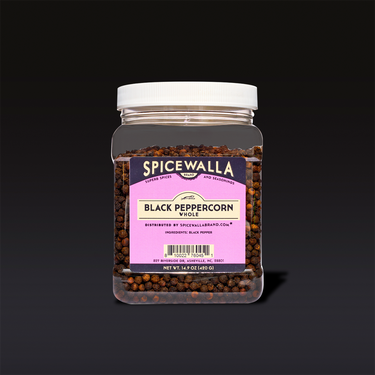
Mostly, yes. Our adjustable mills handle black, white and most mixed peppercorn blends without a problem, since the burr mechanism is built to accommodate a range of berry sizes and densities. Where it gets more particular is with delicate berries — think pink peppercorns or long pepper — which are softer and can gum up a mechanism that's dialed in for a tighter, harder grind. Those varieties are best run through on a coarser setting, or reviewed against our guide to peppercorn varieties before you load anything unfamiliar into the hopper. The short version: if it's a true peppercorn and not a dried chili flake or seed blend, your HexMill can almost certainly handle it, but knowing the berry you're working with means you'll get a more consistent grind size and better flavor out of every twist, instead of guessing and hoping the mill sorts it out for you. It's also worth noting that pepper and salt should stay in their own dedicated mills; even though the mechanisms look similar, a mill designed to grind pepper isn't built to grind salt safely, and running the wrong ingredient through the wrong mill is one of the fastest ways to shorten its life.
No, and this is one of those rules worth actually following. Moisture is the enemy of any grinding mechanism: wet spices clump together instead of flowing freely through the burrs, and standing water inside the housing can corrode metal components you can't easily inspect or replace. Dishwasher heat makes it worse by warping wood or acrylic housings over time, sometimes enough that the grinder no longer twists smoothly at all. Stick to dry cleaning methods only: wipe the exterior with a dry or barely damp cloth, and leave the internal mechanism alone unless you're doing a full manufacturer-approved cleaning. If you notice clumping or a sticky twist action, that's usually a sign moisture got in somewhere, and it's worth addressing before the mechanism seizes up entirely rather than after. The complete care breakdown, including what to do if moisture does get inside and how to tell if a mechanism is already compromised, lives in our product warranty and policy terms, worth a bookmark if you're using your grinder daily.
No, and this is a structural issue, not just a flavor one. Salt is corrosive to standard grinding mechanisms in a way peppercorns simply are not, so a mill built to grind salt needs non-corrosive internals designed specifically for that job. Run salt through a standard pepper mechanism and you risk permanent internal rust that ruins the grinder for good; not a quick fix, a full replacement. If you want to grind salt at the table, look for a set explicitly built for it. Most sets sold as pairs will specify which grinder is for pepper and which is rated for salt, usually right on the base or the packaging, so it's worth a quick check before you start using either one, especially if you're gifting a set or setting one up in a shared kitchen. We highlight this exact distinction across our complete HexClad cookware buying guide, along with a few other pairing mistakes people make when they're first building out their kitchen tools.
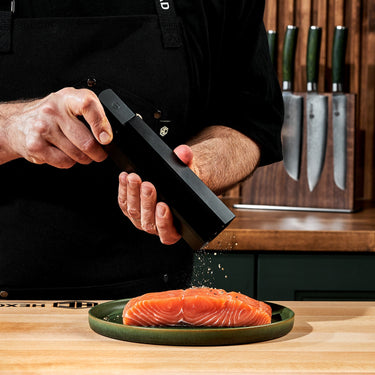
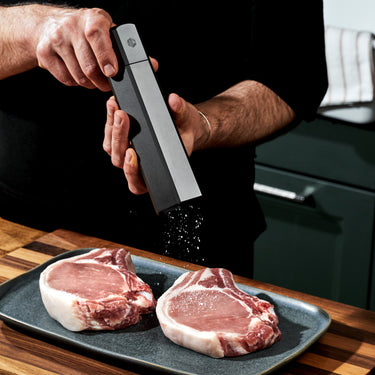
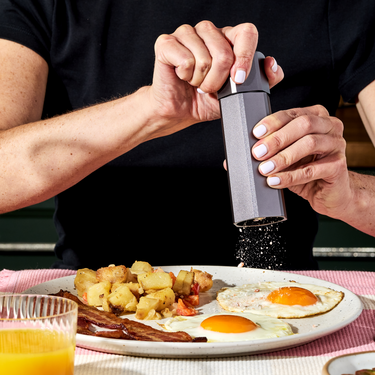
Yes, and this is where a manual mill still beats most electric mills or electric pepper mills on the market. Our grinders feature ten precise settings, ranging from a coarse crack built for steaks and roasts to an ultra-fine dust perfect for popcorn or delicate sauces, giving you real control over your seasoning instead of whatever a pre-ground pepper shaker hands you. Coarsely ground pepper holds its texture and bite on a finished dish, while a finer setting disappears into a sauce or dressing without adding grit, and switching between the two takes one twist of the dial rather than swapping out an entire tool. Electric mills often lock you into two or three preset options; a manual dial gives you the full range in between, which matters more than it sounds like once you start cooking a wider variety of dishes. Once you've got your grind size dialed in, put that freshly ground pepper to work anywhere: a couple of cracks over leftover roast chicken, a finishing touch on roasted vegetables, or pretty much anything else on the table, instantly levels up with one of our HexMill sets.
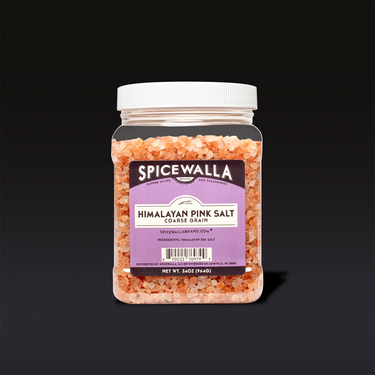
Yes. Our ten adjustable settings are built to handle tough, mineral-rich crystals like pink Himalayan salt, crushing them down from coarse chunks all the way to an ultra-fine dusting depending on what a dish calls for. That range matters because Himalayan salt tends to run harder and more irregular in shape than standard table salt, so a mechanism that can't adjust often jams or grinds unevenly. We recommend running coarse grain through the mill when you're prepping a batch of our Spicewalla coarse pink Himalayan salt, since it's cut specifically for grinding rather than sprinkling straight from the container. The result is fresh, coarsely ground salt whenever you want it, instead of relying on whatever grind size happened to come pre-packaged. It's a small change that makes a bigger difference than most people expect, since freshly ground salt tastes noticeably brighter than salt that's been sitting pre-ground for months, and you get to decide exactly how coarse or fine it lands on the plate.
No, and this is worth remembering before you toss one in the sink out of habit. Introducing water or moisture into either kind of grinder causes the internal crystals to clump and effectively freeze the mechanism, whether it's built for salt or pepper. Once that happens, the grinder either stops turning altogether or starts producing an uneven, gummy grind instead of a clean one. Dry cleaning methods are the only safe option: a dry cloth on the exterior, and leaving the internal mechanism alone unless you're following manufacturer instructions for a full teardown. The complete guidance, including what to do if moisture already got in and how to tell whether a mechanism is already compromised, is outlined in our product warranty and policy terms. If you notice a grinder feels stiffer than usual or the twist has started catching, that's usually the first sign moisture snuck in somewhere, and it's worth addressing before the mechanism seizes entirely.
Salt grinders require corrosion-resistant ceramic internal mechanisms to withstand the chemical acidity of mineral salt crystals over repeated use, since standard metal parts would corrode from the inside out. Pepper grinders, on the other hand, use hardened steel burrs optimized specifically to shear and crush peppercorns without dulling, a job that doesn't involve the same corrosion risk but does demand a harder, sharper edge on the grinding surface. That's why the two aren't interchangeable, and why a set sold as a pair will typically mark which grinder is rated for salt and which is built for pepper, usually somewhere on the base. Mixing them up — running salt through a pepper mechanism or vice versa — is one of the fastest ways to shorten either tool's lifespan. It's a common mistake for anyone who buys the two separately rather than as a matched set, so if you're building out your table setup piece by piece, double-check which mechanism you're actually getting before you commit.
The volatile ones, mostly, meaning anything that loses aromatic oils quickly once it's cracked open. Black, white and green peppercorns are the obvious candidates, since grinding them fresh right before serving unlocks oils that pre-ground pepper has already lost sitting on a shelf, sometimes for months before it ever reaches your table. Coarse salt is worth grinding fresh too, both for texture on a finished dish and for better control over how much you're actually adding, since a fine, even grind spreads more evenly than a pinch of coarse crystals ever could. Not every spice needs this treatment: delicate ground spices like cinnamon or paprika are usually better bought pre-ground, since there's no equivalent whole form that grinds cleanly at home without specialty equipment. The general test is whether a spice comes as a whole seed, berry or bean in the first place, and whether it smells noticeably more fragrant the moment it's cracked open; if both are true, it's almost always worth grinding fresh at the table instead of reaching for a pre-ground jar. For pepper specifically, we cover which varieties benefit most from fresh grinding, including a few delicate berries that need a gentler touch, in our guide to peppercorn varieties.
The best mills combine a few specific features rather than any single one. Look for a solid-milled metallic housing for durability over years of daily use, paired with adjustable ceramic grinders that let you shift instantly from a fine dusting to a coarser texture depending on the dish. Avoid anything built mostly from plastic internals, since plastic tends to wear down faster under the friction of grinding mineral salt and often can't hold an adjustable setting as precisely over time. Table presence matters too — if a grinder is going to live out on the counter or dinner table daily, it should look and feel like it belongs there. We engineer all of these features directly into our HexMill collection bundle, built to handle both salt and pepper duty across one cohesive set, so you're not mixing and matching mismatched grinders from different brands just to get a table setup that actually works well together.